Talisman
Construction
Talisman Construction at Ars Sacra: Crafting Power from Solomonic Lore
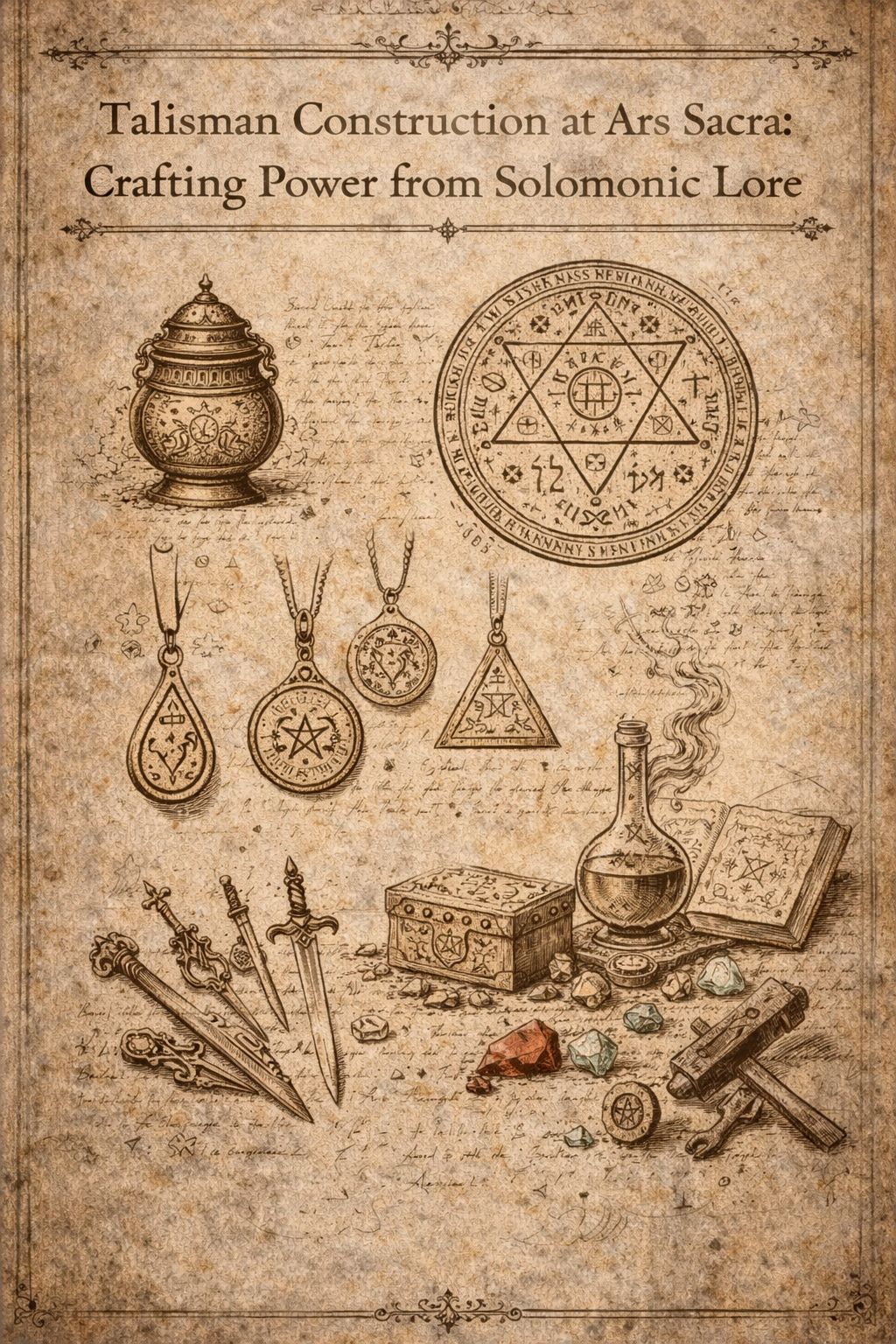
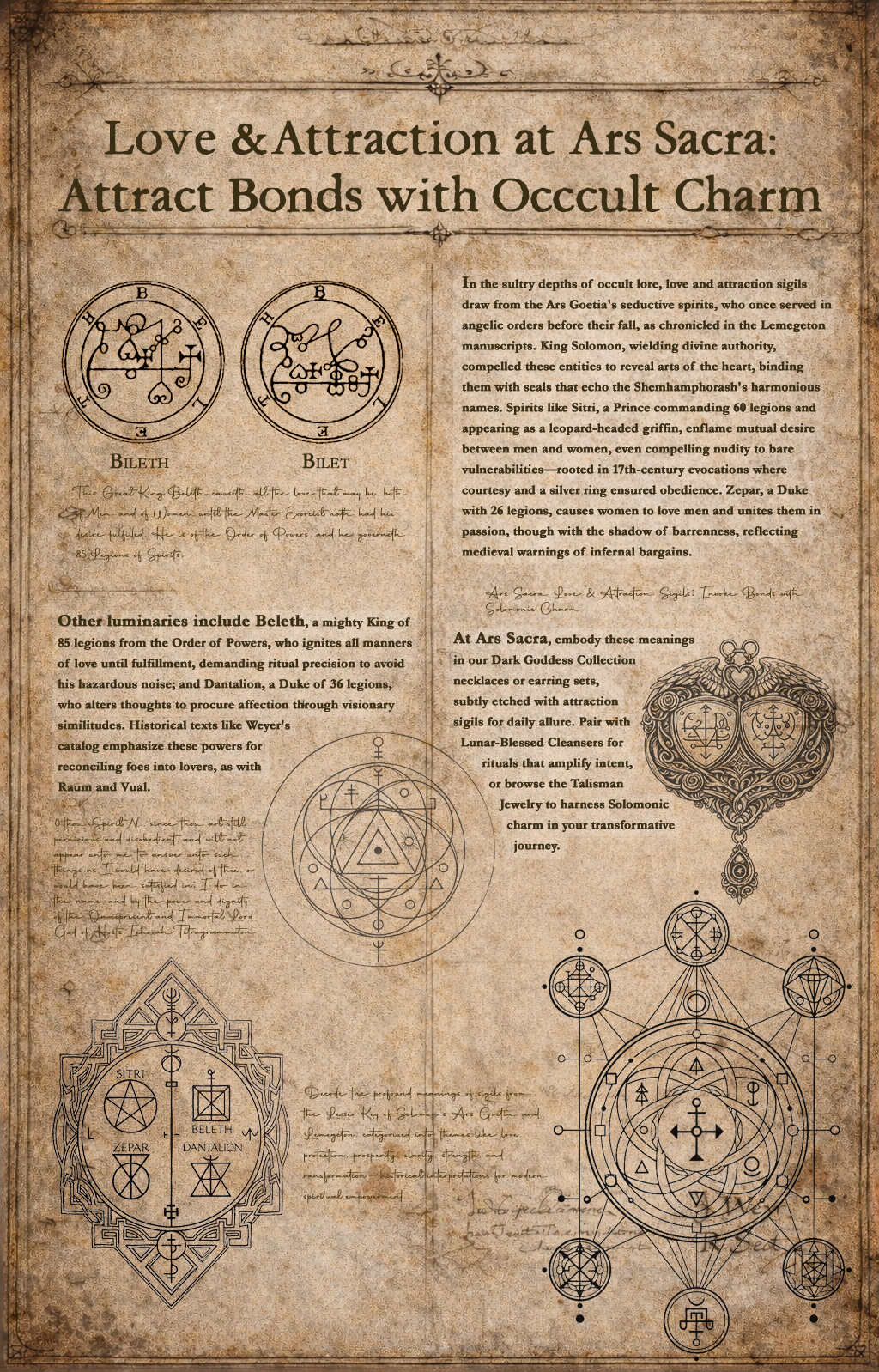
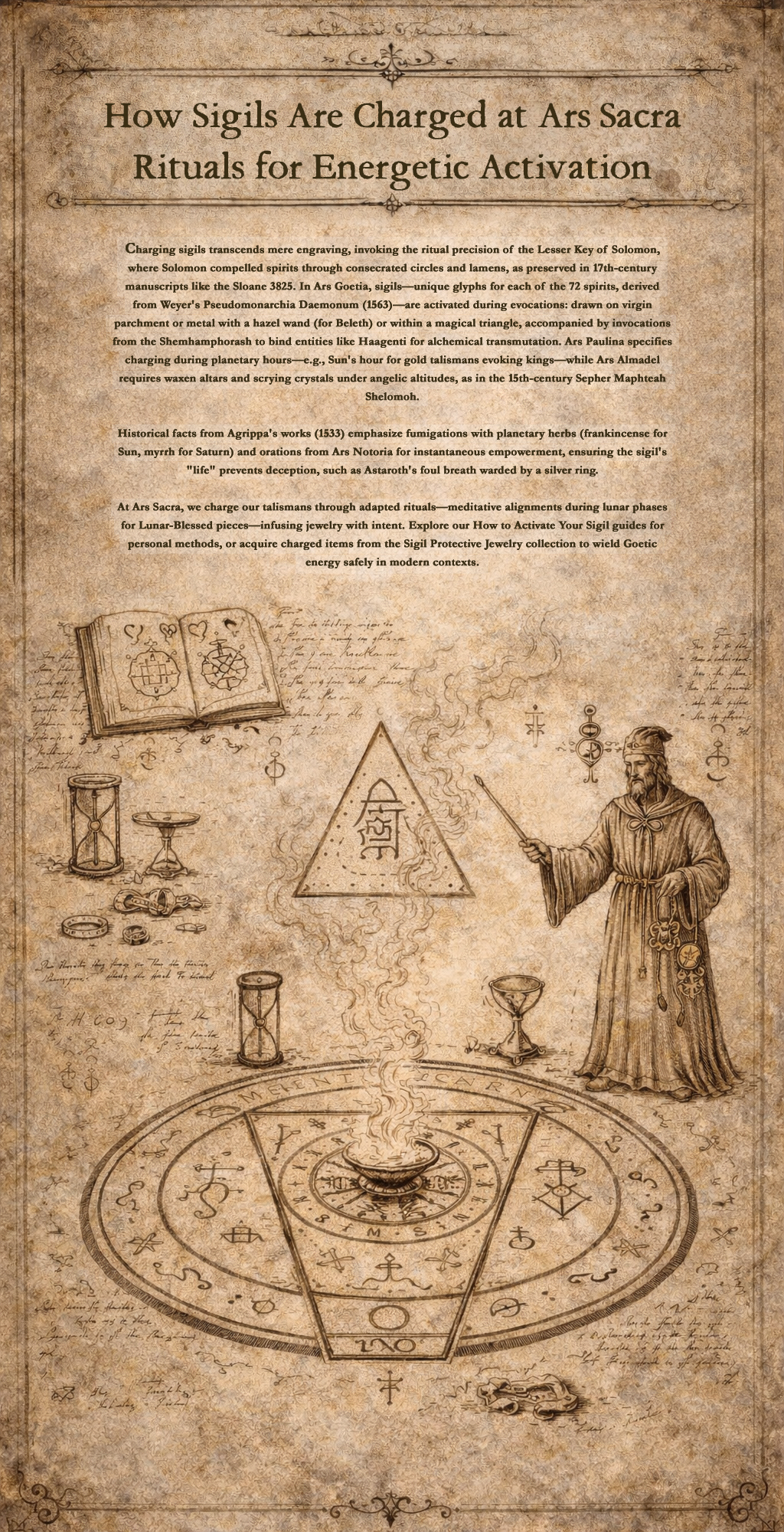
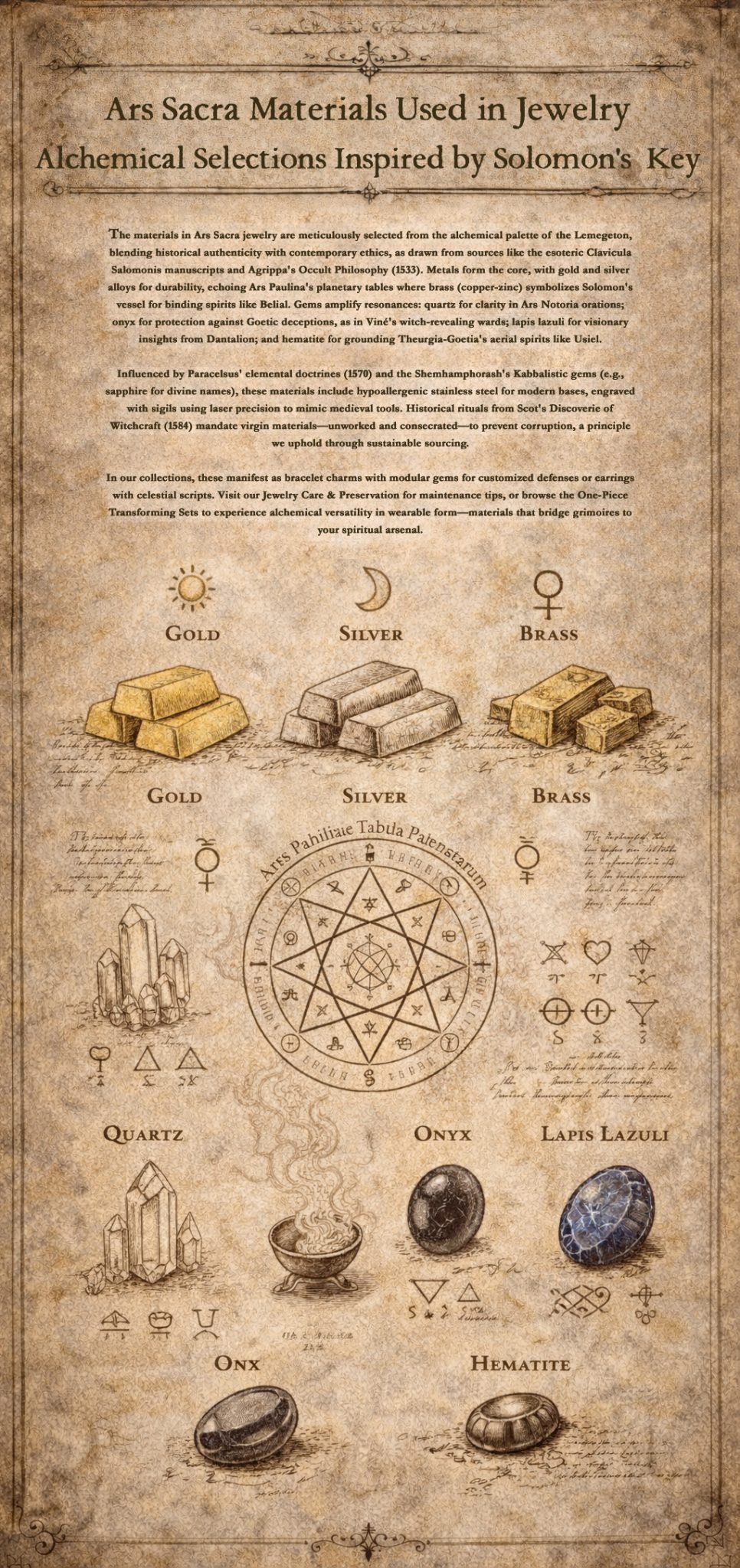
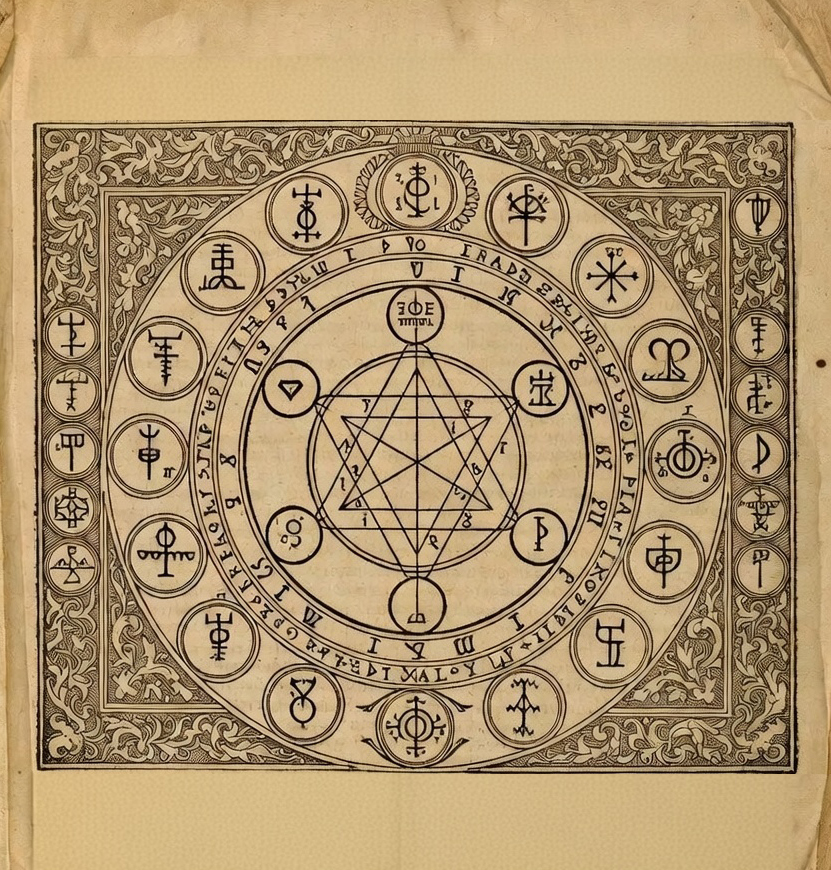
At the forge of arcane craftsmanship, Ars Sacra's talisman construction draws directly from the ritualistic blueprints of the Lemegeton, or Lesser Key of Solomon, a 17th-century compendium of medieval grimoires attributed to the biblical king's dominion over spirits. As detailed in manuscripts like the British Library's Sloane 3825 and Harleian 6483, talismans—often lamens or seals worn upon the breast—were essential for safe evocation, compelling obedience from the 72 Goetic spirits bound in a brass vessel and submerged in a Babylonian lake. Rooted in texts such as Johann Weyer's Pseudomonarchia Daemonum (1563) and Heinrich Cornelius Agrippa's Three Books of Occult Philosophy (1533), these artifacts integrate planetary correspondences, alchemical processes, and Kabbalistic elements like the Shemhamphorash—the 72-fold name of God from Exodus 14:19-21—to infuse inert materials with ethereal potency.
Construction begins with selecting metals aligned to the spirits' hierarchies (e.g., gold for kings, copper for dukes), as prescribed in Ars Paulina's planetary tables, followed by engraving sigils during auspicious hours to charge them with intent. Materials extend to gems and alloys resonant with Hermetic principles of "as above, so below," ensuring durability and energetic flow. At Ars Sacra, we adapt these historical methods to create jewelry that bridges antiquity and modernity, from rings etched with Goetic seals to necklaces harmonized with Ars Almadel's angelic altitudes. Explore the sub-sections below for in-depth insights into metals, charging rituals, and our curated materials—empower your craft by browsing the Sigil Protective Jewelry collection or integrating these principles via our Ritual Use Guides for activation and maintenance.