Symbolism & Mythology: Tracing the Threads of Esoteric Tradition
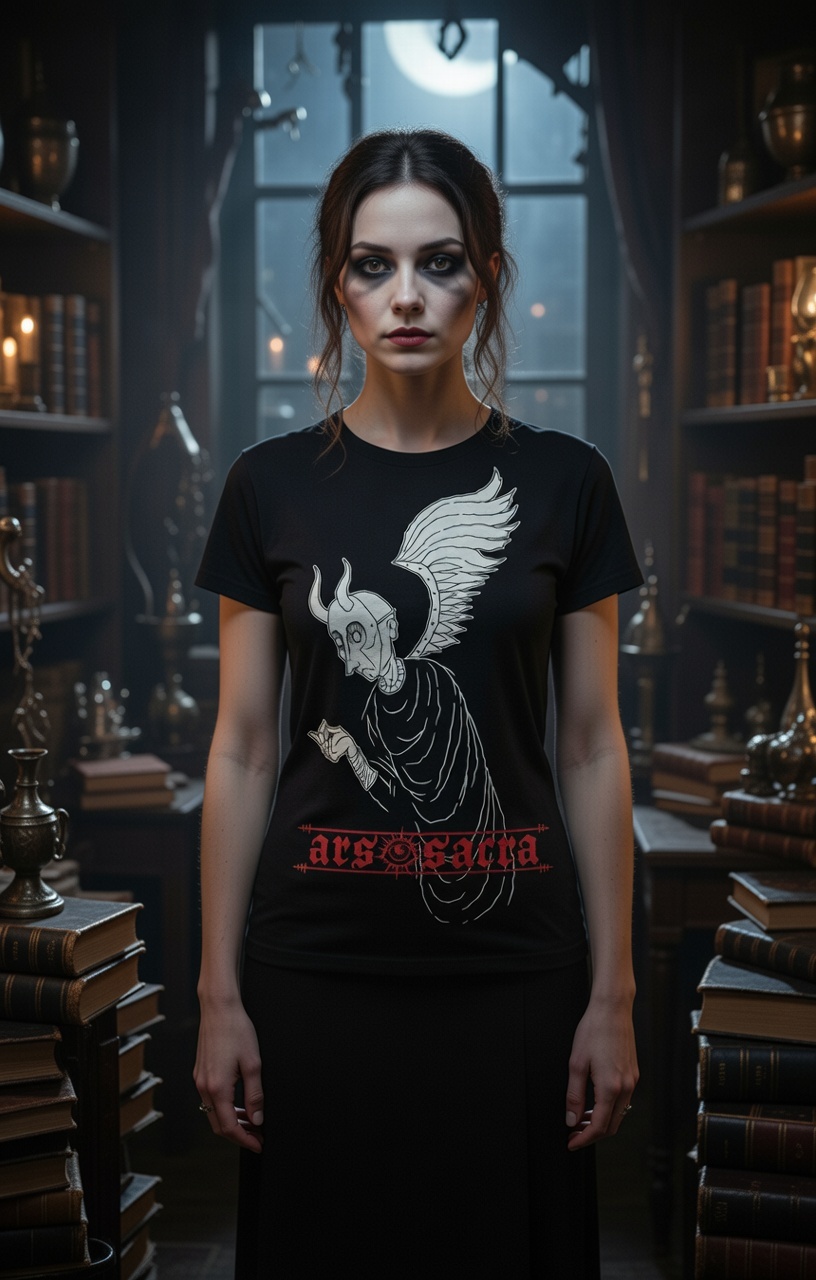
In the shadowed corridors of history, where myth intertwines with the arcane, lies the symbolic heart of Ars Sacra. This section of the Journal delves into the foundational elements that inform our craft: sigils, seals, angelic invocations, and ritual diagrams. Far from mere ornamentation, these symbols serve as vessels for deeper philosophical and mythological currents, echoing through centuries of human inquiry into the divine and the hidden. Here, we explore not as practitioners dispensing formulae, but as archivists preserving the layered meanings that have shaped esoteric traditions.
Symbolism & Mythology: Tracing the Threads of Esoteric Tradition
In the shadowed corridors of history, where myth intertwines with the arcane, lies the symbolic heart of Ars Sacra. This section of the Journal delves into the foundational elements that inform our craft: sigils, seals, angelic invocations, and ritual diagrams. Far from mere ornamentation, these symbols serve as vessels for deeper philosophical and mythological currents, echoing through centuries of human inquiry into the divine and the hidden. Here, we explore not as practitioners dispensing formulae, but as archivists preserving the layered meanings that have shaped esoteric traditions.
Solomonic Seals and Protective Wards: Echoes of Ancient Authority
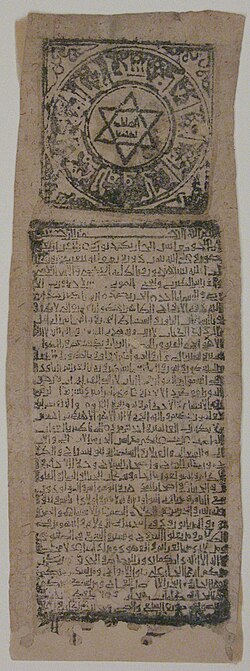
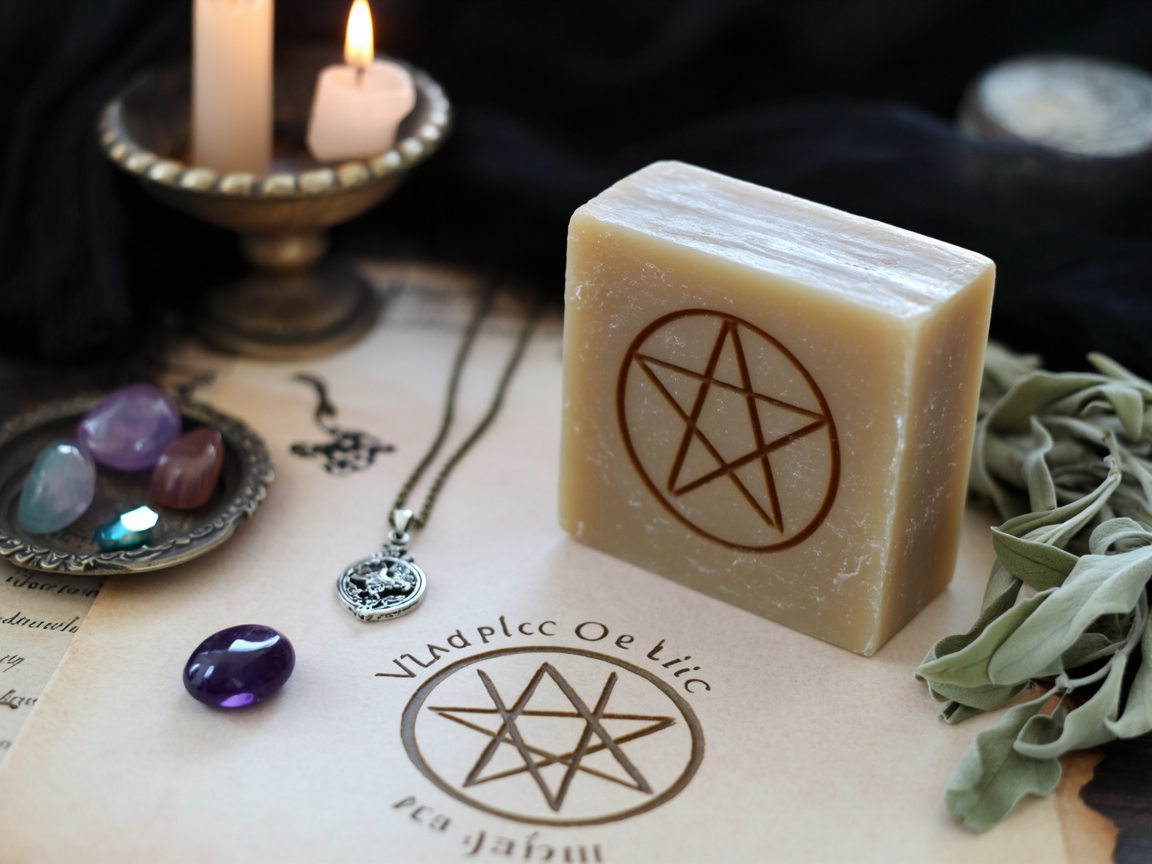
At the core of many ritual systems stand the Solomonic seals—geometric emblems attributed to the biblical King Solomon, said to command spirits and ward against malevolent forces. These designs, immortalized in grimoires such as the Key of Solomon (Clavicula Salomonis), draw on a syncretic blend of Jewish mysticism, Hellenistic astrology, and medieval demonology. The pentacle, for instance, often inscribed with divine names and planetary sigils, represents not just protection but a microcosmic map of cosmic order.
Historically, these seals evolved from talismanic traditions in the ancient Near East, where Babylonian and Egyptian amulets bore similar inscriptions to invoke divine favor. By the Renaissance, figures like Marsilio Ficino and Giordano Bruno reinterpreted them through Neoplatonic lenses, viewing them as conduits for harmonizing the soul with celestial hierarchies. In Ars Sacra, such seals inspire our engravings and wards, not as tools for domination, but as reminders of humanity’s enduring quest to impose symbolic structure on chaos. They symbolize restraint and balance, where the act of inscription becomes a meditation on ethical boundaries within the unseen.
Angelic and Planetary Hierarchies: Celestial Architectures
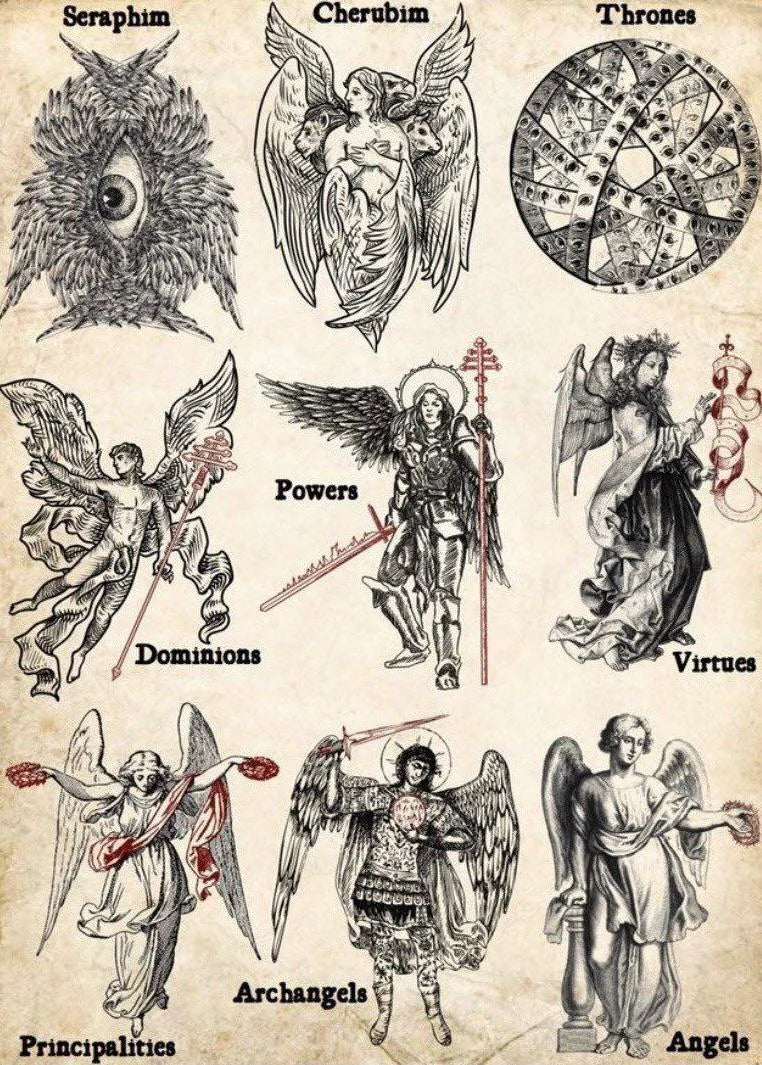
The angelic names etched into Ars Sacra’s artifacts—Raphael, Michael, Gabriel—stem from a vast hierarchical framework that spans Abrahamic, Gnostic, and Hermetic texts. Pseudo-Dionysius the Areopagite’s Celestial Hierarchy (circa 5th century CE) formalized this structure, dividing angels into nine choirs, each aligned with divine emanations. This schema influenced later works, such as the Ars Goetia, where angels govern planetary spheres: Raphael with Mercury’s swift intellect, Michael with the Sun’s radiant authority.
Planetary correspondences further enrich this symbolism, linking metals, colors, and herbs to cosmic influences—gold for the Sun, silver for the Moon. These hierarchies reflect a worldview where the macrocosm mirrors the microcosm, a concept central to alchemical and astrological thought from Ptolemy to Paracelsus. Within the Journal, we reflect on these as symbolic architectures: not prescriptive ladders to ascent, but frameworks for contemplating interconnectedness. In our pieces, an angelic sigil might evoke Mercury’s agility, inviting reflection on communication and transformation rather than literal invocation.
The Evolution of Sigils: From Medieval Manuscripts to Renaissance Revival
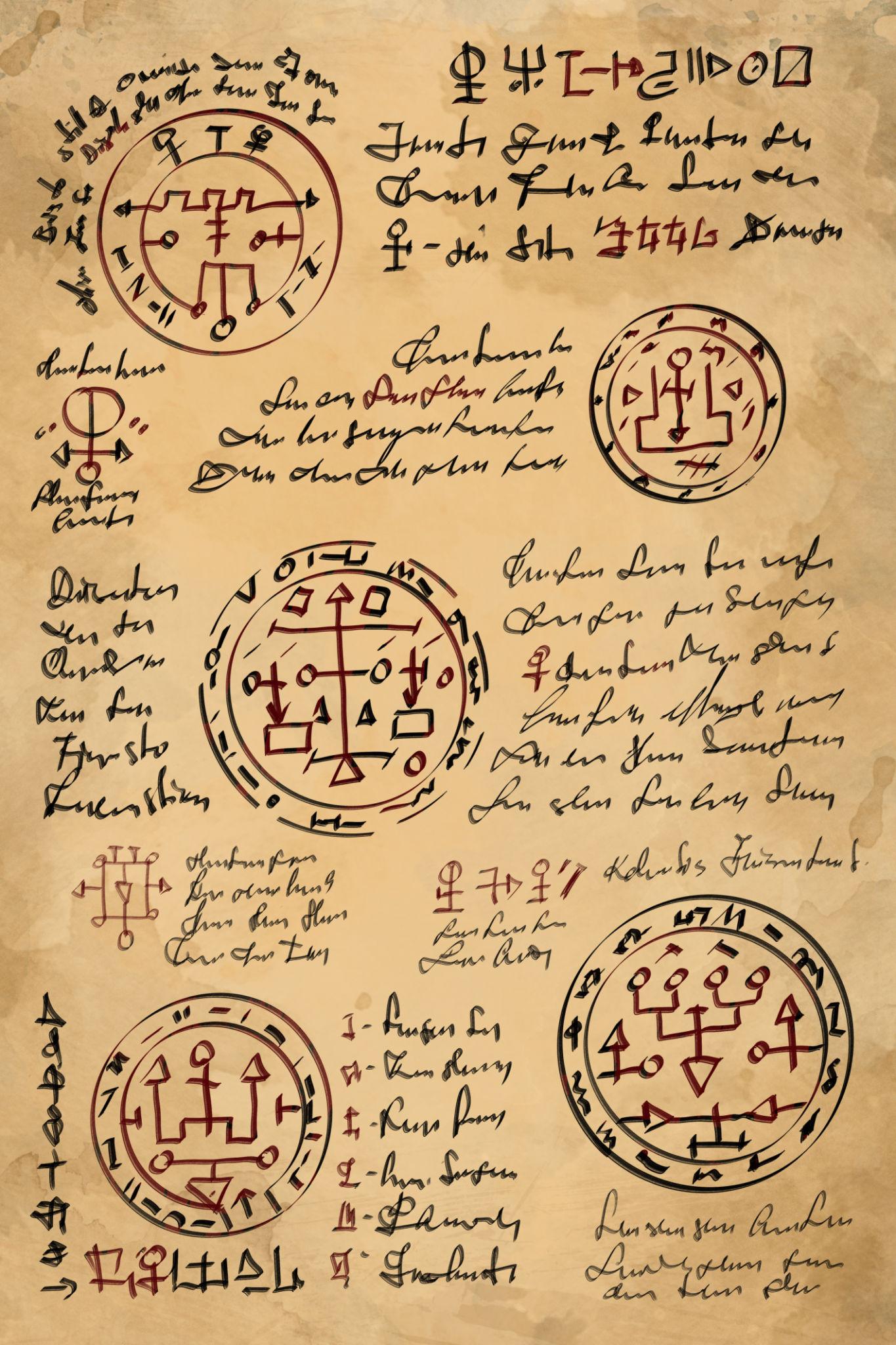
Sigils, those intricate, abstracted symbols representing entities or intentions, trace a fascinating path through esoteric history. Emerging in medieval grimoires like the Picatrix—an 11th-century Arabic text translated into Latin—they combined Arabic astrology with European magic. By the 16th century, Heinrich Cornelius Agrippa’s Three Books of Occult Philosophy systematized sigil construction, often deriving sigils from magic squares or kameas, in which numbers aligned with planetary forces generated unique patterns.
The Renaissance witnessed a surge in sigil innovation, as scholars such as John Dee developed the Enochian system, blending angelic languages with geometric forms. Over time, sigils shifted from rigid reproductions to personalized abstractions, as seen in Austin Osman Spare’s 20th-century sigilization techniques, which emphasized subconscious intent over historical fidelity. In Ars Sacra, we honor this evolution by incorporating sigils that nod to these roots—engraved with care to highlight their fluidity. They stand as testaments to symbolism’s adaptability, evolving not as static icons but as living expressions of cultural synthesis.
Myth as Symbolic Structure: Beyond Literal Narrative
Mythology, in the context of Ars Sacra, transcends storytelling to become a structural language for the ineffable. Joseph Campbell’s monomyth or “hero’s journey” illustrates this: myths like the descent of Inanna or the labors of Hercules encode psychological and ritual processes—initiation, transformation, return. In esoteric traditions, myths function allegorically; the Greek Titanomachy, for example, symbolizes the ordering of primal chaos into divine hierarchy, paralleling alchemical transmutation.
Renaissance humanists like Pico della Mirandola viewed myths through a Platonic prism, where Orphic hymns and Homeric epics veiled profound truths. This perspective informs our approach: myths are not historical facts to be debunked nor spells to be cast, but symbolic scaffolds for understanding human experience. A pendant bearing a mythic motif in Ars Sacra might evoke Persephone’s cycle, prompting contemplation of renewal and shadow, without claiming supernatural efficacy.
Through these explorations, the Symbolism & Mythology section of the Ars Sacra Journal seeks to illuminate the threads connecting past and present. It is an invitation to reflect on how symbols endure, adapting across eras while retaining their core resonance. In preserving these insights, we honor the esoteric tradition not as a relic, but as a vital, evolving dialogue with the mysteries that define us.
Continuity, Not Reinvention
Symbolism & Mythology within Ars Sacra is not about reviving belief systems, nor about reinterpreting myths for modern consumption. It is about preservation—maintaining continuity with traditions that treated symbols as serious instruments of thought.
By approaching mythology as structure rather than spectacle, Ars Sacra positions its symbols as tools for reflection, boundary, and identity. Meaning is not imposed. It is encountered.
The symbol waits. The reader engages. The relationship forms—deliberately, and with respect.