Metal, Engraving, Patina, and the Meaning of Ritual Wear
Within Ars Sacra, craft is not treated as technique alone. It is understood as a dialogue between material, time, and intention.
Historically, sacred objects were not valued for perfection. They were valued for fidelity—to material truth, to symbolic order, and to the limits imposed by hand and tool. Metalwork, engraving, and surface aging were approached with deliberation, each stage reinforcing the object’s role as a bearer of meaning rather than decoration.
This journal entry documents the philosophy of craft as preservation, not production.
Metal as Symbolic Medium
Across esoteric and ceremonial traditions, metals were never neutral. Their selection reflected cosmological associations, durability, and ethical weight.
Gold signified permanence and authority. Silver reflected receptivity and memory. Iron embodied boundary and defense. These associations were not superstition, but symbolic shorthand—used to align material with purpose.
Ars Sacra approaches metal accordingly: not as aesthetic choice, but as structural foundation. The material establishes the object’s symbolic vocabulary before form is applied.
Engraving as Act of Commitment
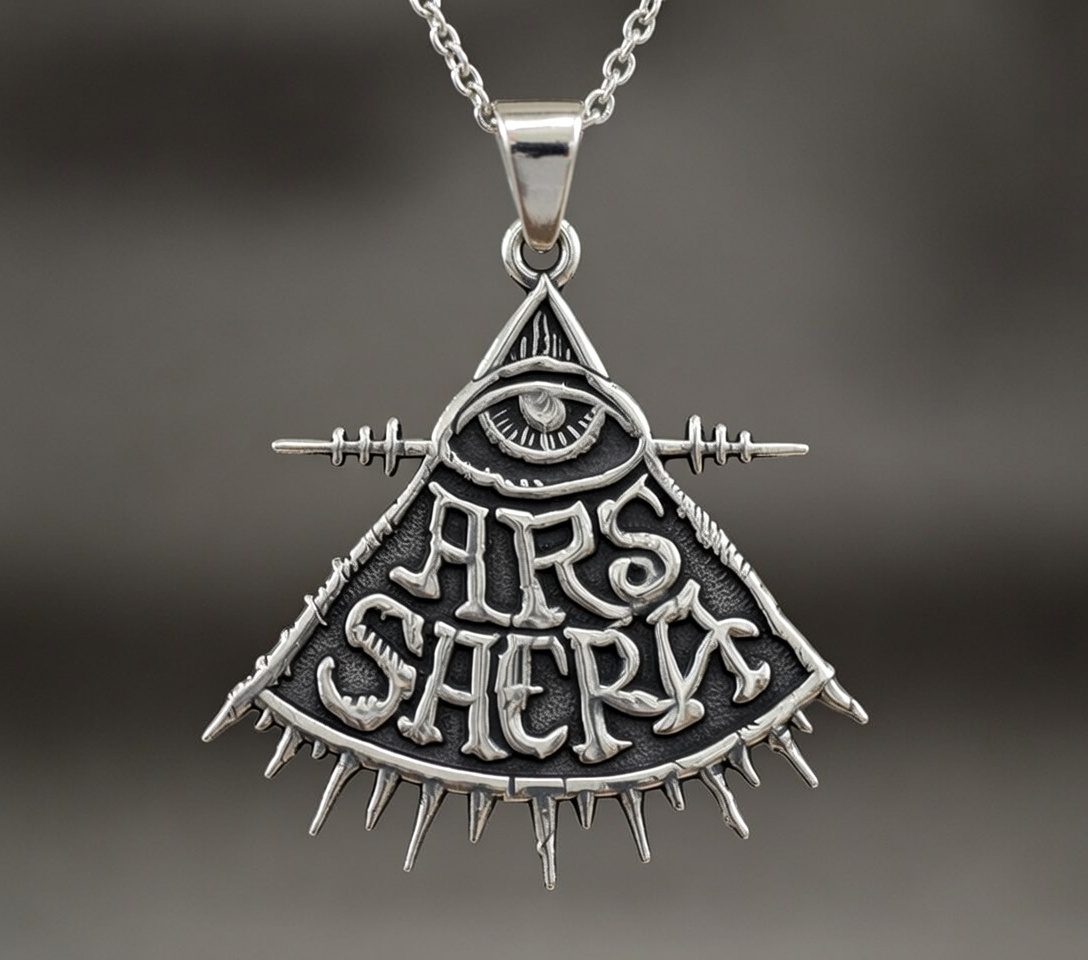
Engraving transforms surface into statement. Historically, it was irreversible by design—a deliberate contrast to ink or paint.
The act of cutting into metal carried philosophical significance. It required patience, accuracy, and acceptance of consequence. Errors remained visible. Lines could not be softened without evidence.
This permanence is central to ritual craft. Engraving does not illustrate meaning; it binds it to matter.
Ars Sacra preserves this discipline by favoring methods that retain the presence of the hand—subtle variations that signal intention rather than flaw.
Patina and the Refusal of Artificial Perfection
Time alters metal. Oxidation, wear, and surface variation were historically understood as signs of use, not decay.
Patina records contact—between object and environment, between symbol and bearer. In ritual contexts, this accumulation was valued. It demonstrated continuity.
Artificial uniformity erases history. Ars Sacra rejects this erasure. Surface aging is treated as narrative: a visible archive of interaction.
Imperfection, when earned, is not damage. It is documentation.
Ritual Wear and Material Memory
Objects designed for ritual use were expected to change. Handling softened edges. Engraved lines darkened. Weight shifted perception.
This transformation anchored meaning. The object remembered what the bearer might forget.
Ritual wear, in this sense, is not deterioration—it is confirmation. It signals that the object has fulfilled its symbolic role rather than remaining untouched.
Craft as Ethical Practice
Artisan craft within Ars Sacra is governed by restraint. Excessive ornamentation, unnecessary polish, or theatrical embellishment weaken symbolic clarity.
The goal is coherence, not spectacle.
By honoring historical methods and material limits, Ars Sacra positions craft as an ethical practice—one that values durability, transparency, and respect for lineage over novelty.
Preservation Through Making
To craft is to preserve.
Each engraved line, each retained imperfection, each unpolished edge affirms continuity with traditions that treated objects as vessels of thought rather than commodities.